How Much Does Chimney Removal Cost in Pennsylvania?
Chimney removal cost runs $800 to $7,500 in one national cost guide and $1,000 to $15,000 in another. The second guide says most homeowners spend $2,000 to $10,000, with a national average of $4,500. A partial chimney removal, which takes off the stack above the roof, runs $800 to $2,000 in one guide. A full removal runs $2,500 to $7,500 in two guides and $4,000 to $10,000 in another.
Those are national market numbers, not our price list. Where a Pennsylvania job lands depends on the chimney’s height, where it sits and how much gets patched. Our chimney repair and removal page covers the chimney work we do around Pittsburgh.
What does chimney removal cost?
The table pulls together published ranges from three national cost guides. Each guide prices the job a little differently, so the ranges overlap more than they match.
| Job | Published market range |
|---|---|
| Chimney removal, typical range | $800 to $7,500 |
| Chimney removal, what most homeowners spend | $2,000 to $10,000 |
| Stack above the roofline, removal only | $1,000 to $1,500 |
| Stack above the roofline, roof repairs included | $800 to $2,000 |
| Stack taken down to the roofline | $500 to $2,500 |
| Chimney breast inside the house | $1,500 to $2,500 |
| Full removal, repairs afterward included | $2,500 to $7,500 |
| Whole chimney, stack and breast | $4,000 to $10,000 |
| Roof repair after the stack comes down | $375 to $1,800 |
| New walls after the breast comes out | About $2,500 more |
| Structural engineer’s consultation | About $525 |
| Steel supports, where needed | $100 to $400 per foot |
| A full truckload of debris hauled | Up to $650 |
The stack rows differ in what they count. One guide’s $800 to $2,000 includes scaffolding, sealing the hole and roof repairs. Another prices the stack alone at $1,000 to $1,500, plus $375 to $1,800 for roof work.
What is the difference between partial and full chimney removal?
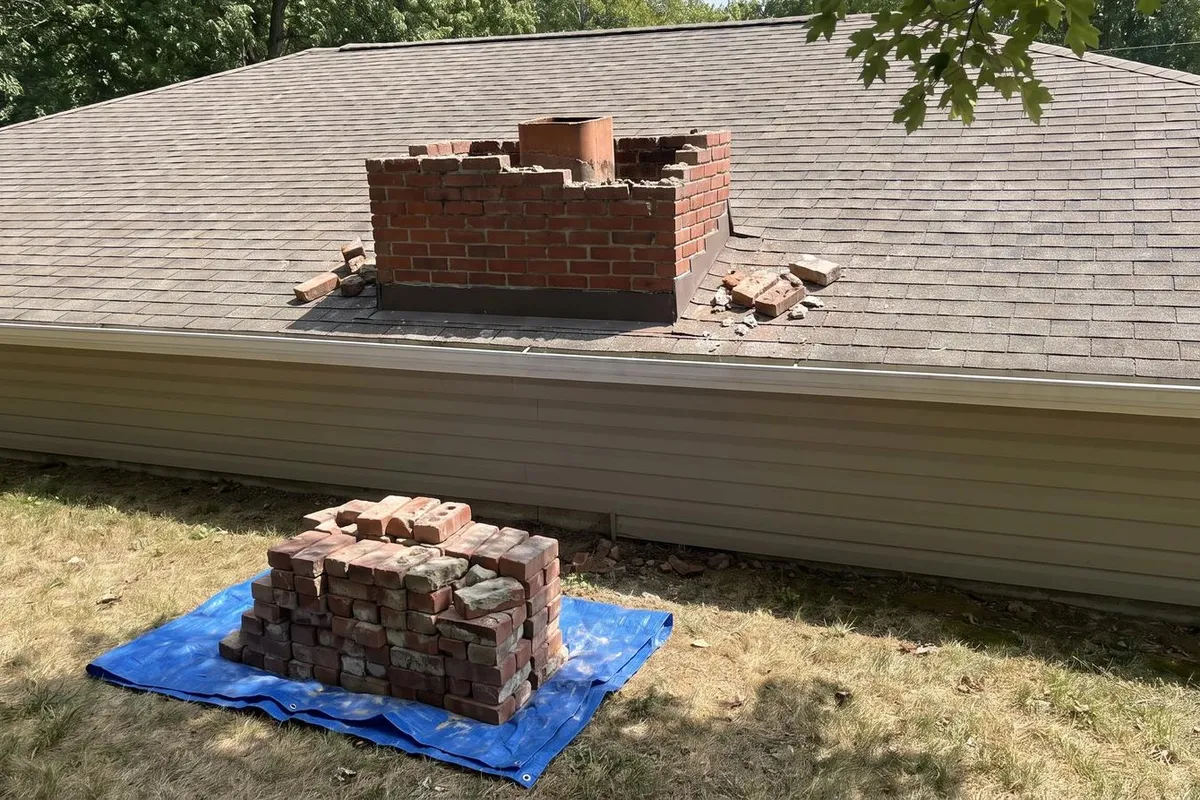
A partial chimney removal takes the stack down to just below the roofline. A roofer then closes the roof over the opening. One guide says a partial removal may be all a leaking or leaning stack needs. Another says taking off only the stack likely avoids the cost of steel supports.
A full removal takes the chimney out through every floor, down to its footing in the basement. One guide’s full chimney demolition cost includes structural support and repairs to the roof, walls and floor. Openings left in floors and ceilings get framed and closed by a carpenter. Taking a chimney out of a basement adds labor and debris, one guide notes.
Sometimes only the chimney breast inside the house comes out. One guide says whatever stays above then needs support from brackets or steel beams. A stack shared by a duplex or row house is one reason to leave it standing.
Before a full removal, a structural engineer may need to confirm the framing does not rest on the masonry. An interior chimney can also come out during an interior demolition job, while the walls are open.
What drives the cost to remove a chimney?
- Height and stories. One guide names chimney height and the number of floors it spans as key drivers. It puts a two-story stack at around $2,000 and a three-story stack closer to $3,000.
- Brick or block. One guide prices brick, cinder block, concrete and stone chimneys differently. Another says brick chimney removal costs more than taking out a lighter prefab chimney.
- Inside or outside wall. One guide says a chimney outside the framing costs less to remove than one inside it. It also says a chimney on an outside wall comes down whole, above and below the roofline. Another says interior chimneys usually need more structural work.
- Roof pitch and access. One guide says a stack on a steep, multi-story roof costs more than one on a flat, single-story house. Another says a stack near the eaves costs less than one at the peak, since it is easier to reach.
- Scaffolding. Chimneys rise above the roofline, so the work may need ladders, scaffolding or staging. A mason quoted in one guide says barriers and staging can add time and cost.
- Patching. A full removal leaves openings in the roof, floors and walls to close. One guide adds about $2,500 for new walls where the breast comes out.
- Hauling. One guide says hauling is often in the labor quote but can show up as its own line. It puts a full truckload of debris at up to $650. We haul the brick and mortar away as part of our debris removal and hauling.
What has to happen before a chimney comes out?
First, find out what still vents into the chimney. Gas appliances can use the flue to vent fumes out of the house. One guide lists a furnace or hot water tank venting through the chimney as a reason to keep the stack.
If the chimney is coming out anyway, the furnace, boiler or hot water tank needs another way to vent first. One code guide notes that once a hot water tank vents through a side wall on its own pipe, the masonry chimney is no longer needed. That venting is work for a licensed HVAC contractor or plumber, done before any brick comes down. Sweeping, liners and flue inspections belong to a certified chimney sweep.
Permits depend on where the house sits. Inside the City of Pittsburgh, the permit office is Permits, Licenses and Inspections (PLI). In other towns, it is the borough, township or the code agency it uses. When we quote the job, we go over what your municipality requires and who handles each step.
Older chimneys can hide asbestos. One guide says homes built before the 1980s may contain asbestos that chimney removal disturbs. We do not handle asbestos: if it turns up, a licensed abatement contractor removes it before we start.
Nearly half of Pittsburgh’s homes were built before 1940. A full removal in a house that old cuts through painted plaster, trim and ceilings.
EPA rules cover renovation work that disturbs lead-based paint in homes built before 1978. That work calls for a certified firm and certified renovators who follow lead-safe work practices. Davis Demolition and Masonry is an EPA Lead-Safe Certified Firm.
Should you remove the chimney or rebuild it?
Chimney removal is generally less expensive than rebuilding, one guide says. It puts rebuilding at $5,000 to $15,000, with an average of $10,000.
| Job | Published market range |
|---|---|
| Chimney repointing | $500 to $2,500 |
| Chimney rebuilding, as a repair | $500 to $8,000 |
| Chimney rebuild | $5,000 to $15,000 |
Chimney rebuild cost swings with how much comes down. One guide lists rebuilding as a repair at $500 to $8,000 and notes a rebuild can be partial or complete.
Removal fits a chimney that no longer vents anything and keeps dropping brick. If the chimney still works and is structurally sound, one guide says rebuilding may offer better long-term value.
When does repointing make more sense than removal?
A stack with sound brick and washed-out mortar may not need to come down at all. One guide puts chimney repointing at $500 to $2,500. It notes weathered mortar joints can often be fixed by repointing, while deeper structural damage may call for rebuilding sections.
Repointing means raking out the worn mortar and packing the joints with new mortar. Our brick pointing page covers that work, and our post on brick pointing cost walks through the numbers. One guide says a well-built, well-kept brick chimney can last 50 to 100 years.
What is the next step for chimney removal around Pittsburgh?
Your number comes from the chimney itself: its height, where it sits and how much gets patched. Davis Demolition and Masonry is based in Pittsburgh and works about 40 miles around. We have been in the demolition business since 2001.
We take chimneys down, partial or full, and haul the brick away. We also repoint and rebuild chimneys worth keeping. We look at the job and give you a price before any work starts.
We keep you posted during the job and leave the site clean. Call or text (412) 720-1866, or read more on our chimney repair and removal service page.